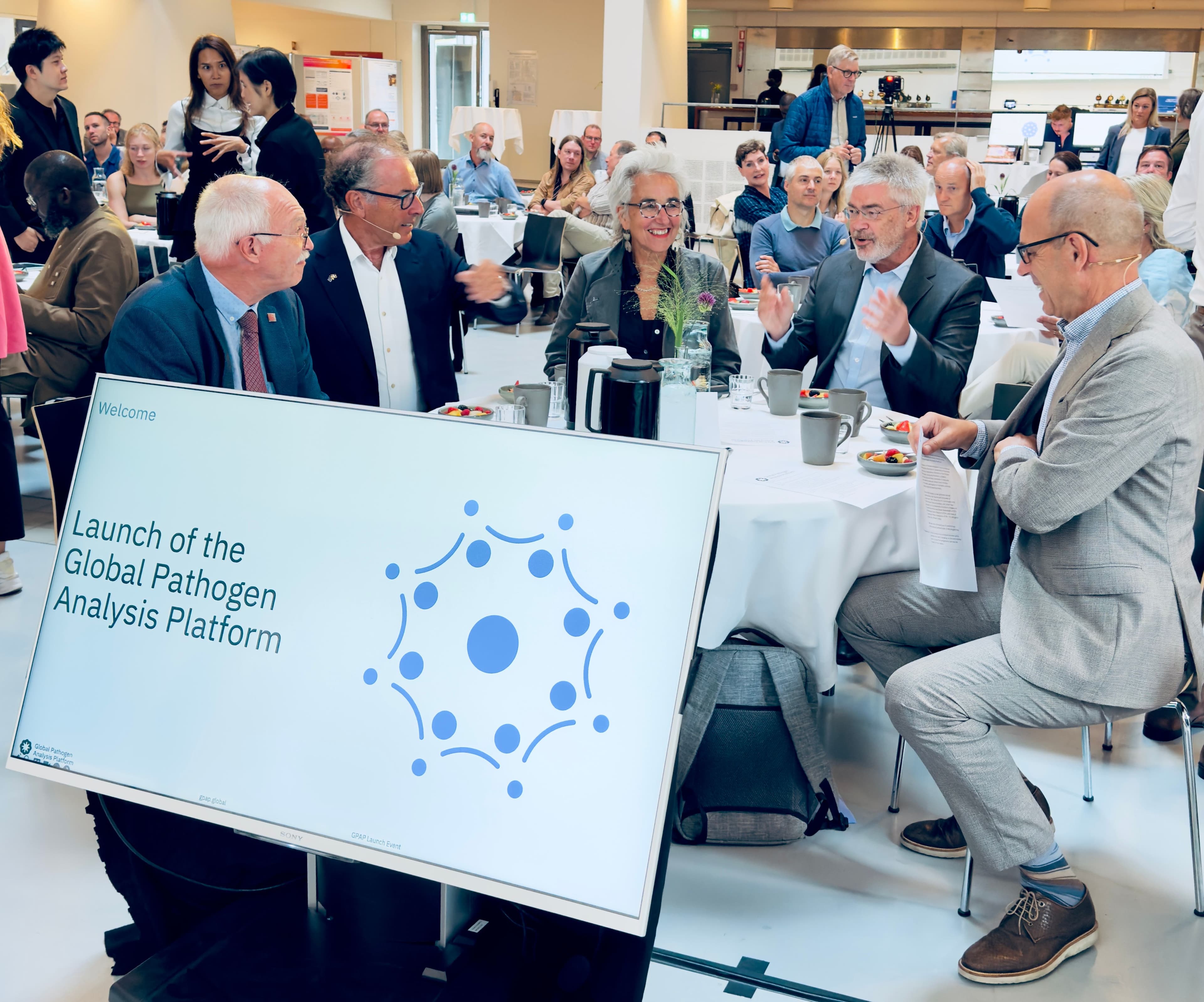
3, 2, 1 and LAUNCH!
Though the work in the Global Pathogen Analysis Platform (GPAP) infrastructure project started in earnest at the beginning of 2026, the official launch of the efforts to co-create the platform was held 10 August 2026 at the Technical University of Denmark.
An overview of GPAP and the context for its initiation set the stage. Henrik C. Wegener, Programme Director of GPAP hosted the event. Attendees were welcomed by Anders Overgaard Bjarklev, President, Technical University of Denmark, who noted the need for the work given the inevitability of new pandemics. Mads Krogsgaard Thomsen, CEO, Novo Nordisk Foundation, related GPAP to the mission of the foundation - to strengthen global resilience against drug-resistant and respiratory infections.
Putting the need for GPAP into context, Marion Koopmans, Professor, Erasmus Medical Centre, Honorary Doctorate, Technical University of Denmark, presented the current state of pandemic preparedness and response capabilities. She highlighted the complexity of outbreaks and the need for a common platform for analysis.
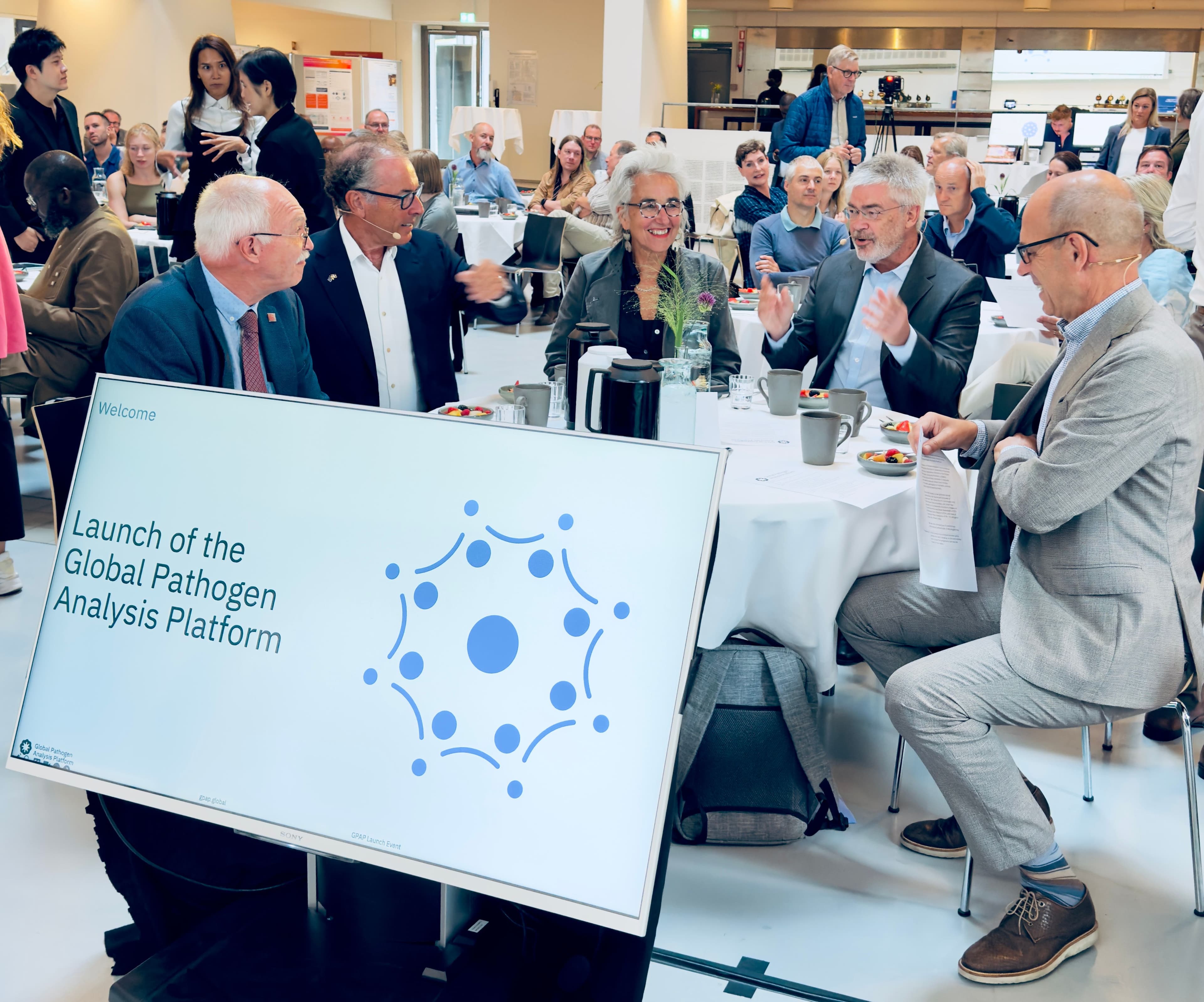
Pictured above (left to right): Anders Overgaard Bjarklev, President, Technical University of Denmark, Mads Krogsgaard Thomsen, CEO, Novo Nordisk Fonden, Marion Koopmans, Professor, Erasmus Medical Centre, Honorary Doctorate, Technical University of Denmark, Frank M. Aarestrup, Professor, Technical University of Denmark, and Henrik C. Wegener, Programme Director of GPAP. Photo credit: Sidsel Kretzschmer Henriksen
Part of the event focused on how GPAP will be co-created and developed. Frank M. Aarestrup, Professor, Technical University of Denmark, and Samir Bhatt, Professor, University of Copenhagen and Imperial College London, described the efforts so far to develop the platform, and together with Harrison Bo Hua Zhu, Assistant Professor, Technical University of Denmark, demonstrated a prototype of the agentic tool capability using mpox metagenomes from the Democratic Republic of the Congo, as an example.
Pikka Jokelainen, Head of Function, Statens Serum Institut, and René Hendriksen, Professor, Technical University of Denmark, introduced how GPAP will meet the needs of the users through co-creation. During a panel discussion, they were joined by Rungtip Chuanchuen, Professor, Faculty of Veterinary Science, Chulalongkorn University, Thailand, and Fabiola Hernández Pérez, Head of Section, National Service for Agri-Food Health, Safety, and Quality (SENASICA), Mexico, and Christa Twyford Gibson, (moderator) Co-Creation Program Manager, Technical University of Denmark, to discuss needs and expectations for the platform, as well as examples of use cases that are the basis for the co-creation.
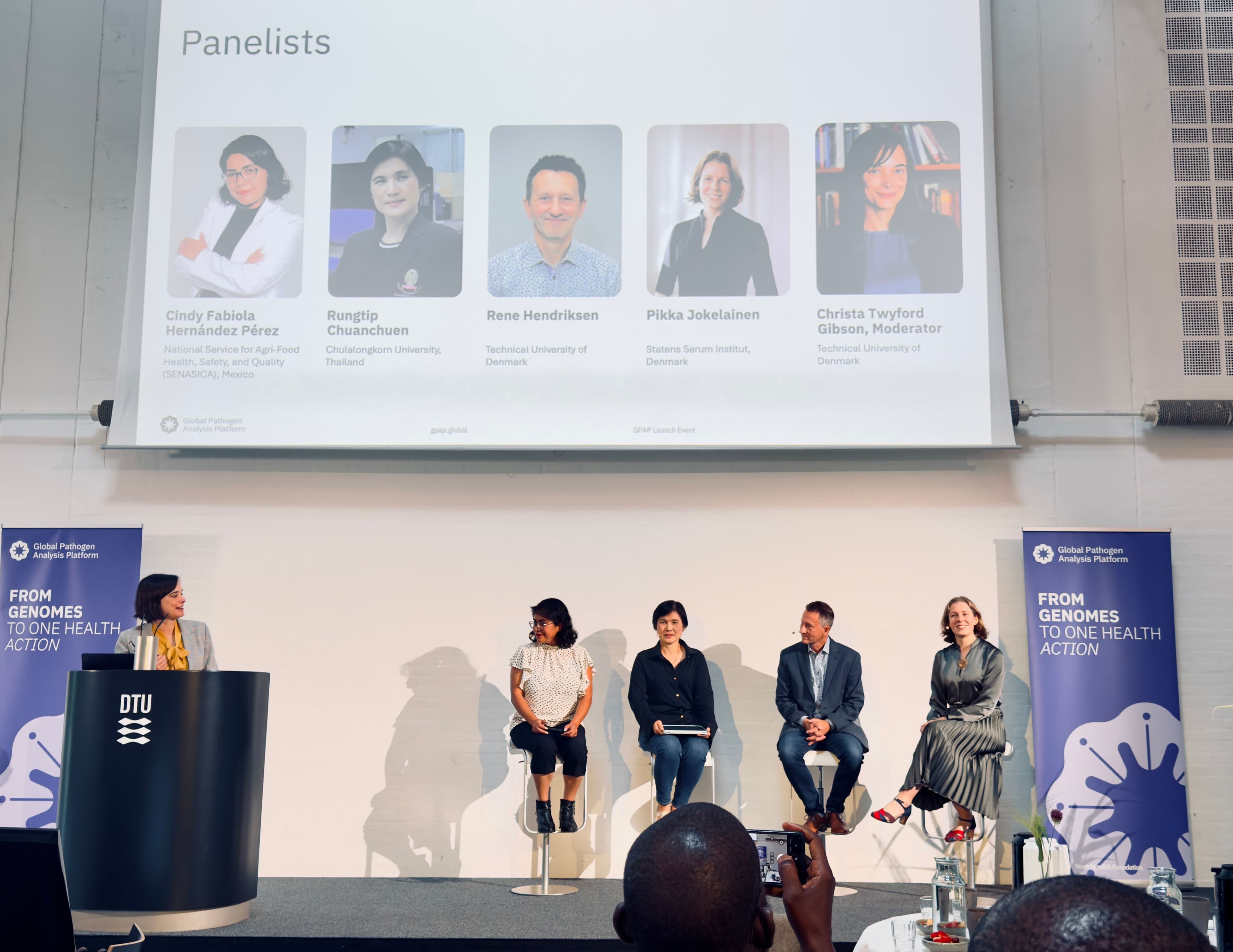
Pictured above (left to right): Christa Twyford Gibson, (moderator) Co-Creation Programme Manager, Technical University of Denmark, Fabiola Hernández Pérez, Head of Section, National Service for Agri-Food Health, Safety, and Quality (SENASICA), Mexico, Rungtip Chuanchuen, Professor, Faculty of Veterinary Science, Chulalongkorn University, Thailand, René Hendriksen, Professor, Technical University of Denmark, and Pikka Jokelainen, Head of Function, Statens Serum Institut. Photo credit: Sidsel Kretzschmer Henriksen
The co-creators of GPAP include the following organizations: Chulalongkorn University, Thailand; National Service for Agri-Food Health, Safety, and Quality (SENASICA), Mexico; Noguchi Memorial Institute for Medical Research, Ghana; Institut National de Sante Publique, Burundi; icddr,b, Bangladesh; Institut Pasteur de Dakar, Senegal; University of Oxford, United Kingdom; Imperial College London, United Kingdom; Erasmus Medical Centre, Rotterdam, The Netherlands; Eötvös Lorand University ELTE, Hungary.
GPAP will give scientists and health professionals worldwide free access to cutting-edge tools for detecting, tracking and analysing infectious diseases with help from advanced bioinformatics and AI.